math104-s21:hw10
Differences
This shows you the differences between two versions of the page.
| Both sides previous revision Previous revision Next revision | Previous revision | ||
|
math104-s21:hw10 [2021/04/16 10:24] pzhou |
math104-s21:hw10 [2022/01/11 18:30] (current) 24.253.46.239 ↷ Links adapted because of a move operation |
||
|---|---|---|---|
| Line 10: | Line 10: | ||
| Hint: (1) what are the local min and local max for $2 + \sin(1/x)$? (2) How does multipling the factor $x^4$ change your previous answer? (3) You can try to change the variable, let $u=1/x$, then the function become $(2 + \sin(u)) / u^4$, the question then becomes: "can you find a sequence of local minimums as $u$ goes to $+\infty$?" | Hint: (1) what are the local min and local max for $2 + \sin(1/x)$? (2) How does multipling the factor $x^4$ change your previous answer? (3) You can try to change the variable, let $u=1/x$, then the function become $(2 + \sin(u)) / u^4$, the question then becomes: "can you find a sequence of local minimums as $u$ goes to $+\infty$?" | ||
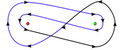
| - | {{:math104: | + | {{math104-s21: |
| - | {{:math104: | + | {{math104-s21: |
| If you find constructing local minimum too difficult, you can prove something weaker: there is a sequence of non-zero critical points of $f$ convergent to $0$, where a critical point of $f$ is a point $x$ with $f' | If you find constructing local minimum too difficult, you can prove something weaker: there is a sequence of non-zero critical points of $f$ convergent to $0$, where a critical point of $f$ is a point $x$ with $f' | ||
math104-s21/hw10.1618593850.txt.gz · Last modified: 2021/04/16 10:24 by pzhou
Page Tools
Except where otherwise noted, content on this wiki is licensed under the following license: CC Attribution-Share Alike 4.0 International


